
Don't wanna be here? Send us removal request.
Statistics
We looked inside some of the posts by globogenix and here's what we found interesting.
Average Info
Notes Per Post
2
Likes Per Post
2
Reblog Per Post
0
Reply Per Post
0
Time Between Posts
7 days
Number of Posts By Type
Text
5
Last Seen Tumblr Blogs




Fun Fact
Celebrities use Tumblr as well.
Text
Employee Surveillance: What It Is, How It Works, And Why It Matters?

Ever wondered if your employer is monitoring your activities at work? Whether you’re an employee concerned about privacy or a manager seeking to boost productivity, understanding the realities of employee surveillance is crucial.
Quick Answer: Employee surveillance refers to the practice of monitoring employee activities both online and offline to ensure productivity, protect company data, and maintain workplace safety. Common methods include tracking emails, internet usage, location, and even physical activities via cameras or access logs.
What Is Employee Surveillance?
Employee surveillance is the systematic observation of employees’ work-related behavior and communications, carried out either digitally, physically, or through a combination of both. It can involve various methods, such as computer activity tracking to monitor browsing history, application usage, and keystrokes; email and message monitoring to review work communications for compliance and security; CCTV cameras to maintain the safety of physical spaces; biometric systems to record attendance and prevent unauthorized access; and GPS tracking to monitor the real-time locations of field workers.
Why Do Companies Use Employee Surveillance?
Businesses adopt monitoring for several reasons, including measuring productivity to ensure employees are using work hours effectively, enhancing data security by detecting and preventing insider threats or data leaks, maintaining regulatory compliance to meet legal or industry-specific standards, and promoting workplace safety by preventing accidents or harassment incidents. In short, companies implement surveillance to safeguard resources while maintaining operational efficiency.
Is Employee Surveillance Legal?
Yes but with rules. Laws regarding employee surveillance and the use of AI at work vary by country and even by state. In most regions, employers must have a legitimate business reason for monitoring, and employee consent may be required, often through contracts or policy handbooks. Monitoring practices must also comply with personal privacy laws. For instance, in the United States, the Electronic Communications Privacy Act (ECPA) permits certain types of workplace monitoring, while in the European Union, the General Data Protection Regulation (GDPR) imposes stricter standards for transparency and consent. As AI at work becomes more widespread, organizations must ensure that any AI-driven monitoring tools are used ethically, transparently, and in compliance with these regulations.
Pros and Cons of Employee Surveillance

The advantages of employee surveillance for employers include improved productivity tracking, enhanced security and fraud prevention, and stronger compliance with regulations. For employees, monitoring can create a safer workplace, ensure clear accountability, and support fair evaluations. However, it also has potential drawbacks, such as reducing trust and autonomy, risking overreach into personal privacy, and possibly having a negative impact on employee morale
Best Practices for Ethical Employee Monitoring
If you’re an employer, monitoring should be transparent, limited, and purposeful. This means clearly communicating monitoring policies before implementation, limiting the scope to only what is necessary for business operations, ensuring that surveillance records are stored securely to prevent misuse, and regularly reviewing policies to stay aligned with legal requirements and employee feedback.
How Technology Shapes Modern Surveillance

With advancements in AI and cloud-based tools, surveillance is no longer limited to simple time-tracking. Modern platforms can analyze productivity trends, detect unusual patterns that may indicate security threats, and integrate with project management tools for seamless oversight. However, these technological capabilities also raise ethical concerns, making it essential to balance efficiency with respect for privacy
The Future of Workplace Monitoring

The demand for remote work has accelerated the adoption of employee monitoring tools, and we can expect to see more AI-powered analytics, stricter global privacy regulations, and hybrid models that combine monitoring with employee wellness tracking. Companies that adapt to these changes with transparency, fairness, and compliance are more likely to build stronger, more trusting work environments. Additionally, integrating insights from monitoring tools into ad copy strategies can help businesses optimize messaging and engagement while respecting employee privacy.
Explore more - Globussoft: The Future of AI-Powered Business Starts Here!
youtube
Summary
Employee surveillance involves monitoring employees’ activities and communications to ensure productivity, protect company data, and maintain workplace safety. It can be conducted digitally, physically, or through a combination of both, using tools such as computer activity tracking, email monitoring, CCTV cameras, biometric systems, and GPS tracking. While it offers benefits like improved productivity, enhanced security, regulatory compliance, and a safer workplace, it can also reduce trust, infringe on privacy, and negatively impact morale if mismanaged. Legal frameworks vary by region, making transparency, consent, and ethical implementation essential. With advancements in AI and remote work, surveillance is becoming more sophisticated, requiring a careful balance between efficiency and employee privacy to foster a fair and trusting work environment.
FAQs
Q1: What is employee surveillance? It’s the practice of monitoring employee activities digitally or physically to ensure productivity, security, and compliance.
Q2: Is it legal for my employer to monitor me? Yes, if it complies with local laws and company policy, and often with your consent.
Q3: How can I tell if I’m being monitored? Check your company handbook, IT policy, or ask HR directly. Look for monitoring software or visible cameras.
Q4: Does monitoring affect trust? It can transparent policies and ethical use help maintain trust between employer and employees.
Q5: What’s the future of employee monitoring? Expect more AI-driven tools, greater regulatory oversight, and a stronger focus on balancing productivity with privacy.
#EmployeeSurveillance#WorkplaceMonitoring#DigitalMonitoring#WorkplaceProductivity#EmployeeTracking#Youtube
0 notes
Text
What Are The Latest Technology Trends Shaping The Future?

Have you ever wondered which technologies are revolutionizing the world right now and how they might affect your daily life or business tomorrow? As innovation accelerates at an unprecedented rate, understanding the latest technology trends is crucial not only for staying competitive but also for making informed decisions in a digital-first world.
Whether you're a tech enthusiast, a business owner, or simply someone curious about the future, this guide covers the game-changing trends reshaping industries from artificial intelligence to spatial computing backed by real-world applications and near-future potential.
Top Technology Trends Dominating 2025
1. Artificial Intelligence Gets More Human
What’s happening?
AI is evolving beyond mere automation.By 2025, generative AI tools such as GPT-4o and advanced image generators are evolving to be remarkably intuitive, highly conversational, and increasingly capable of producing creative, human-like content.
Real-world use cases:
Personalized shopping experiences using AI assistants
Content generation for marketing, media, and design
AI-driven customer service chatbots now recognize emotional cues and tone, enabling more empathetic and personalized interactions.
Why it matters:
AI isn’t just about convenience anymore it's becoming a true collaborator, improving decision-making, productivity, and customer engagement.
2. Spatial Computing and the Rise of Mixed Reality

What’s happening?
With companies like Apple, Meta, and Microsoft investing in AR/VR ecosystems, spatial computing is creating immersive, interactive experiences that blend digital content with the physical world.
Applications:
Virtual training simulations in healthcare and aerospace
Immersive shopping and product demos
Remote collaboration via virtual offices and holographic meetings
Why it matters:
Spatial computing redefines how we interact with data, collaborate across distances, and experience content transforming both the workplace and entertainment industries.
3. Quantum Computing Breakthroughs
What’s happening?
Quantum computing is advancing from research to early-stage implementation, especially in cryptography, materials science, and complex simulations.
Key developments:
Google and IBM are expanding quantum cloud access
Error correction improves algorithm reliability.
Commercial sectors piloting quantum-enhanced forecasting models
Why it matters:
Though not mainstream yet, quantum computing will eventually tackle problems today’s supercomputers can’t solve by opening new frontiers in science and innovation.
4. Sustainable Tech and Green Software Engineering

What’s happening?
The tech industry is pivoting toward sustainability, with a growing focus on reducing carbon footprints through energy-efficient design and eco-conscious development.
Emerging trends:
Data centers powered by renewable energy
Carbon-aware software that minimizes energy use during peak grid loads
ESG compliance tools powered by AI
Why it matters:
Sustainable technology is no longer optional; it's expected by consumers, investors, and regulators. Future-ready brands are those that align innovation with environmental responsibility.
5. Personalized Health Tech and Biohacking
What’s happening?
Wearables are evolving into proactive health tools, collecting biometric data in real time to personalize care and even predict medical issues.
Breakthroughs include:
Continuous glucose monitors integrated with smartwatches
AI-based health diagnostics from voice, breath, or facial data
At-home lab testing and wellness optimization platforms
Why it matters:
This empowers individuals to take control of their health while enabling doctors to offer more precise, preventative care.
The Broader Impact of These Technology Trends

From automation and healthcare to sustainability and security, these tech trends are not isolated; they're interconnected. For example:
AI improves energy efficiency in smart grids.
AR enhances remote team productivity.
Quantum computing boosts drug discovery efforts.
The integration of these technologies into daily workflows means that every industry from agriculture to education will evolve in form, function, and speed. Adapting to this future means more than upgrading tools; it requires a mindset shift toward lifelong learning and agile transformation.
How to Prepare for What’s Next
Wondering how to stay ahead of the curve? Here are actionable steps:
Upskill regularly: Learn about AI, cybersecurity, and data science.
Adopt a flexible tech stack: Choose modular, scalable tools.
Monitor trend convergence: Stay updated on how multiple technologies blend (e.g., AI + IoT + AR).
Invest in digital ethics: Understand privacy, transparency, and responsible AI practices.
Join future-focused communities: Platforms like GitHub, Reddit, and Medium offer early insights.
Summary
In a world where change is constant and digital transformation is inevitable, keeping pace with technology trends is not just a competitive edge, it's a survival strategy. The trends highlighted above are not future fantasies but present-day realities, already transforming industries and societies. Staying curious, adaptable, and ethically informed is the key to thriving in this brave new digital world.
FAQs: Technology Trends in 2025
Q1. What are the most important technology trends this year?
The top trends include generative AI, spatial computing, quantum advancements, sustainable tech, and personalized health solutions.
Q2. How does AI affect jobs and industries?
AI is reshaping roles automating routine tasks but also creating demand for creative, strategic, and emotionally intelligent–driven work.
Q3. Is augmented reality just for gaming?
No. AR is being widely used in retail, education, healthcare, and remote collaboration.
Q4. Will quantum computing replace classical computers?
Not in the short term. Instead, quantum systems will work alongside classical ones to solve specific, complex problems.
Q5. How can businesses leverage these trends?
By adopting agile infrastructure, training teams, and experimenting with pilot projects that explore new technology potential.
0 notes
Text
Why Is Landing Page Development Important for Marketing?

Have you ever clicked on an ad or email, only to land on a confusing webpage that doesn’t tell you what to do next? That’s a missed opportunity. Now imagine this: What if that page were clear, persuasive, and guided you to take immediate action? That’s the power of a well-crafted landing page.
First impressions count, especially in marketing, and your landing page is often where that impression is made. More than just a pretty layout, a good landing page is what turns curiosity into action. Whether you’re promoting a new product, running ads, or collecting leads, this page can be the deciding factor between someone bouncing or converting.
Let’s break down why landing page development is so vital to successful marketing campaigns.
What Is a Landing Page and Why Does It Matter?
A landing page is a standalone web page created specifically for a marketing or advertising campaign. It’s where a visitor “lands” after clicking a link in an email, ad, or social media post.
Unlike a homepage, which serves many purposes, a landing page has a single, focused goal, usually to drive conversions such as:
Filling out a form
Signing up for a service
Downloading an eBook
Making a purchase
Landing pages matter because they eliminate distractions, guide visitors to take action, and improve campaign performance by speaking directly to a targeted audience.
How Landing Pages Boost Marketing Performance

1. Higher Conversion Rates
Landing pages are designed with one thing in mind: conversion. They’re laser-focused, with no menu bars or links that could distract the visitor.
Key features that drive conversions:
A compelling headline
A persuasive call-to-action (CTA)
Testimonials or trust badges
A clear value proposition
By optimizing each element, businesses can significantly increase the percentage of visitors who turn into leads or customers.
2. Better Targeting and Messaging
When you align your landing page with the intent of your ad or email, you create a seamless user experience.
For example:
An ad for a free trial should lead to a landing page offering that trial.
A blog post promoting a checklist should link to a page with that downloadable asset.
This message match builds trust and keeps the user journey intuitive and engaging.
3. Improved Ad Quality Scores

For platforms like Google Ads, the relevance of your landing page can impact your quality score which affects:
Ad rankings
Cost-per-click (CPC)
Overall campaign performance
A relevant, fast-loading, and mobile-optimized landing page means a better user experience and better ROI for your ad spend.
4. Easier A/B Testing
Landing pages are ideal for A/B testing. Marketers can experiment with:
Headlines
CTA buttons
Images
Layouts
Testing these variables allows you to learn what resonates best with your audience and continuously improve your conversion rates.
How Does Landing Page Development Support Long-Term Marketing Goals?
Beyond short-term conversions, landing page development plays a strategic role in the bigger picture of your marketing efforts. It helps you:
Capture Data: Use forms to collect user info and nurture leads.
Segment Audiences: Different pages for different personas create personalized experiences.
Support Campaign Goals: Whether it's a product launch or webinar signup, dedicated landing pages align with each initiative.
This makes landing pages essential tools in marketing funnels, lead generation, and even retargeting strategies.
Real-World Use Cases of Landing Pages in Marketing

E-commerce Sales: Promote a single product or offer with urgency-driven copy.
SaaS Free Trials: Collect emails in exchange for demo access.
Event Registrations: Provide event details and encourage sign-ups.
Lead Magnets: Offer downloadable content in exchange for contact details.
In each case, the landing page becomes the bridge between interest and action.
You can also watch : Globussoft: The Future of AI-Powered Business Starts Here!
youtube
Final Thoughts
Landing pages may seem simple, but their impact is massive. In a world full of noise and distraction, a dedicated, well-optimized landing page cuts through the clutter and leads your audience exactly where you want them to go.
If you’re investing time and money into marketing, don’t let those clicks go to waste. Prioritize strategic landing page development to turn interest into results.
FAQs About Landing Page Development
Q1: How is a landing page different from a homepage?
A homepage has multiple goals and links, while a landing page is focused on one specific action or offer.
Q2: Do I need a separate landing page for each campaign?
Yes. Tailored landing pages ensure better message matching and higher conversion rates.
Q3: What should every landing page include?
A strong headline, clear CTA, compelling copy, and trust-building elements like reviews or guarantees.
Q4: Can I use landing pages without running ads?
Absolutely. Landing pages are useful for organic campaigns, email marketing, and social sharing as well.
Q5: How do I measure landing page success?
Look at metrics like conversion rate, bounce rate, and time on page to gauge performance.
0 notes
Text
What Is Ad Copy and How Do You Write It Effectively?

Ever wondered why some ads grab your attention instantly while others fall flat?
The answer often lies in the written message, the content designed to persuade, engage, and drive action. Whether you're crafting a Google ad, a Facebook campaign, or a billboard slogan, compelling promotional text can make the difference between a scroll past and a sale. This article breaks down exactly what this kind of messaging is, why it matters, and how to write it so your audience pays attention and takes action.
What Is Promotional Text in Advertising?
Ad copy or promotional text is the compelling written content crafted for advertising purposes, aimed at promoting a product, service, or idea. Its primary goal is to ignite interest and persuade readers to take a desired action, whether it's clicking a link, making a purchase, or subscribing to a newsletter. Through engaging language and persuasive techniques, effective marketing messages captivate the audience, drawing them closer to the brand and motivating them to engage further.
Why Is It So Important?
This messaging serves as your brand’s voice in a competitive digital landscape. Strong advertising content not only increases conversions but also builds trust and brand recognition.
How to Write Effective Advertising Content (Step-by-Step)
1. Know Your Audience

The most successful messaging speaks directly to the reader’s needs and pain points. Ask yourself:
Who are you talking to?
What do they care about?
What language do they use?
2. Lead With a Hook
You have 1–2 seconds to stop someone from scrolling, so a hook is essential.
Examples of strong hooks include:
“Tired of overpaying for car insurance?”
“Stop wasting time on diets that don’t work.”
“Unlock 3x faster results without extra effort.”
Use curiosity, pain points, or bold promises without being misleading.
3. Focus on Benefits, Not Features
Features tell; benefits sell.
Rather than merely cataloging the functionalities of your product, delve into how it enhances the user's experience and meets their needs. Focus on the transformations your product facilitates in their lives, illustrating the value and satisfaction they will gain from using it.
4. Add Social Proof or Credibility
People trust other people, especially when deciding whether to buy. Consider adding:
Customer reviews
Testimonials
Certifications or awards
Numbers (e.g., “Over 10,000 happy users”)
5. Include a Strong Call to Action (CTA)
Don’t assume your reader knows what to do next.
Effective CTAs include:
“Get started now”
"Try it free today"
"Download your free guide"
Make it action-driven and urgent, but not pushy.
6. Test and Refine Constantly
Even the best writers don’t get it perfect on the first try.
Test variations of:
Headlines

CTAs
Tone or length
Visual pairings (for social ads)
Use A/B testing tools to see what performs best and optimize accordingly.
Where Is This Messaging Used?
Ad copy appears in a variety of platforms and mediums, serving as a powerful tool for communication and persuasion. It is commonly used in print advertisements such as magazines and newspapers, where catchy headlines and concise messages draw the reader's attention.
Additionally, it plays a prominent role in digital marketing, featured in online ads, social media posts, and email campaigns where it seeks to engage audiences and drive action.
Television and radio commercials also rely heavily on impactful wording to convey messages quickly and effectively, utilizing a combination of visuals and audio to create memorable impressions. Beyond traditional advertising, persuasive text is essential in product packaging and point-of-sale displays, where enticing descriptions and slogans entice consumers at the moment of decision.
This type of messaging appears in virtually every marketing channel, including:
Google Ads (search & display)
Facebook, Instagram, TikTok Ads
Landing pages
Email campaigns

YouTube video ads
Print and billboard ads
Using Keywords Strategically
When writing or optimizing promotional material, it's important to naturally include keywords for search visibility. However, overstuffing can hurt readability and trust. Aim to use the keyword in:
The page’s meta title or description
A headline or subhead
Naturally, in the body, no more than 1–2 times
You can also watch: Globussoft | People @Globussoft
youtube
Summary: Key Takeaways
Ad copy content serves as a compelling narrative in advertising, meticulously crafted to inspire action and engagement. Exceptional messaging is deeply rooted in the needs and desires of the customer, highlighting clear benefits while resonating on an emotional level. To achieve the most effective results, continually test and refine your approach; your audience will provide invaluable insights into what resonates and drives them to act.
FAQ: Common Questions
What’s the difference between advertising text and content writing?
Advertising text is short-form and persuasive, designed for conversions. Content writing is longer-form, informative, and designed for engagement or education.
How long should promotional content be?
It depends on the platform. Google Ads favor brevity, while landing pages allow for more in-depth storytelling. As a rule of thumb, keep it as short as possible but as long as necessary.
What tools help with writing effective messaging?
Grammarly (for clarity and tone)
ChatGPT or Jasper (for ideation)
Google Ads Preview Tool
A/B testing tools like Optimizely
Can AI write persuasive marketing content?
Yes, it can, but human insight remains crucial. AI can assist in generating ideas and drafts, but emotional resonance and brand nuance are derived from real marketers.
1 note
·
View note
Text
How Is AI at Work Changing the Way We Do Business?
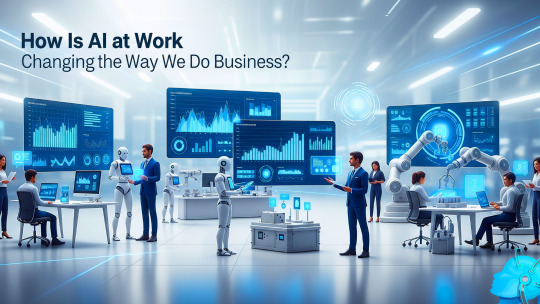
Have you ever wondered how artificial intelligence (AI) is reshaping the workplace you step into every day? Whether you're an employee, manager, or business owner, AI is likely already working alongside you; even if you haven't noticed. From smarter email filters to predictive analytics and AI-powered assistants, the future of work is no longer on the horizon; it's here.
In this article, we examine how AI at the workplace is transforming businesses across various industries, enhancing team efficiency, and redefining roles and responsibilities. Let’s dive into the specific ways AI is changing the modern workplace and what it means for you.
What Is AI at Work?
AI at work means using artificial intelligence technologies to automate, optimize, and enhance tasks and processes in a professional setting. This includes tools like chatbots, predictive analytics, and intelligent document processing. These tools help organizations automate tasks, analyze data, personalize experiences, and make better decisions faster.
Why Is AI Becoming Essential in the Workplace?
The rise of AI is driven by a need for greater efficiency, accuracy, and speed in decision-making. Here are some of the core reasons why businesses are embracing AI:
Saving time: AI can complete monotonous jobs in a matter of seconds.
Cost efficiency: Automating routine operations reduces overhead.
Data-driven decisions: AI analyzes large datasets with greater accuracy than humans.
Enhanced customer service: AI chatbots offer 24/7 support.
Scalability: AI tools can easily adapt to business growth.
How Is AI Being Used in the Workplace Today?

1. Automating Repetitive Tasks
AI excels at handling repetitive, rule-based tasks. For example:
Data entry and validation
Invoice processing
Scheduling meetings
Email triage
Employees may now concentrate on strategic, creative, and interpersonal work thanks to these automations.
2. Enhancing Recruitment and HR
HR departments are using AI to:
Scan resumes using natural language processing (NLP)
Match candidates to roles more accurately
Predict employee attrition
Automate onboarding processes
3. Improving Decision-Making
By examining trends and patterns that humans might overlook, AI systems assist organizations in making more informed decisions. Use cases include:
Forecasting sales
Monitoring supply chains
Managing inventory levels
Recommending personalized marketing campaigns
4. Elevating Customer Experience
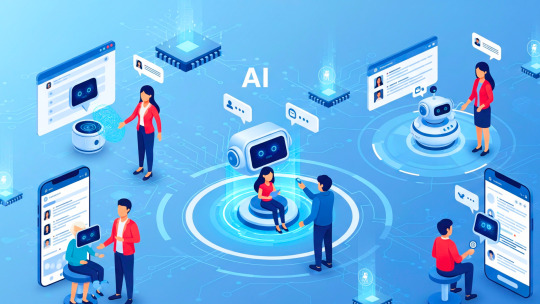
From AI-powered chatbots to sentiment analysis, companies are using AI to:
Provide 24/7 customer support
Personalize customer interactions
Resolve issues faster
For instance, virtual assistants like those from banks or e-commerce platforms use AI to answer FAQs, guide users, and even make financial recommendations.
5. Supporting Remote and Hybrid Work
In the age of hybrid teams, AI supports seamless collaboration through:
Real-time transcription tools
Automated meeting summaries
Smart scheduling
Sentiment analysis in virtual team meetings
What Advantages Does Using AI at Work Offer?
Adopting AI brings a range of strategic benefits:
Increased productivity: Teams accomplish more in less time.
Increased accuracy: AI lessens human mistakes in tasks involving a lot of data.
Enhanced employee satisfaction: Workers spend less time on mundane tasks.
Faster innovation: Businesses can quickly test and refine new ideas.
How Can You Prepare for AI in Your Workplace?

Whether you're an individual employee or a team leader, here are steps to stay ahead:
Upskill regularly: Discover how to use AI tools that are appropriate for your position.
Embrace change: Be open to evolving job descriptions.
Collaborate with AI: Use AI as an assistant, not a replacement.
Stay ethical: Understand how data is used and make responsible choices.
Challenges and Ethical Concerns
Despite its benefits, AI also brings challenges:
Bias in AI algorithms
Job displacement fears
Data privacy concerns
Over-reliance on automation
Businesses must implement strong ethical frameworks and transparency to build trust in AI systems.
Also, watch this video - Globussoft: The Future of AI-Powered Business Starts Here!
youtube
Final Thoughts
AI at work is no longer optional; it's essential. From hiring and customer service to day-to-day productivity, artificial intelligence is shaping the way we operate, collaborate, and grow. The good news? Humans are still very much needed. By learning to work alongside AI, we can unlock new levels of efficiency, creativity, and satisfaction.
FAQs About AI at Work
1. Will AI take over my job?
AI may automate certain tasks, but it’s more likely to change your role than replace it entirely. Roles involving creativity, strategy, and empathy remain in high demand.
2. Is AI only for large companies?
No, a lot of AI solutions are available and reasonably priced for small and medium-sized enterprises, particularly via SaaS platforms.
3. What skills should I learn to stay relevant?
Focus on digital literacy, data analysis, AI tool proficiency, and soft skills like communication and critical thinking.
4. How can I ensure ethical use of AI in my workplace?
Encourage transparency, regularly audit AI tools, and involve diverse teams in decision-making to minimize bias.
1 note
·
View note